News · July 23, 2026
Where Canadians Spend Their Gambling Money
Lottery tickets still anchor the Canadian gambling budget, but the draws now share the household ledger with casinos, regulated online sites and legal sports betting.
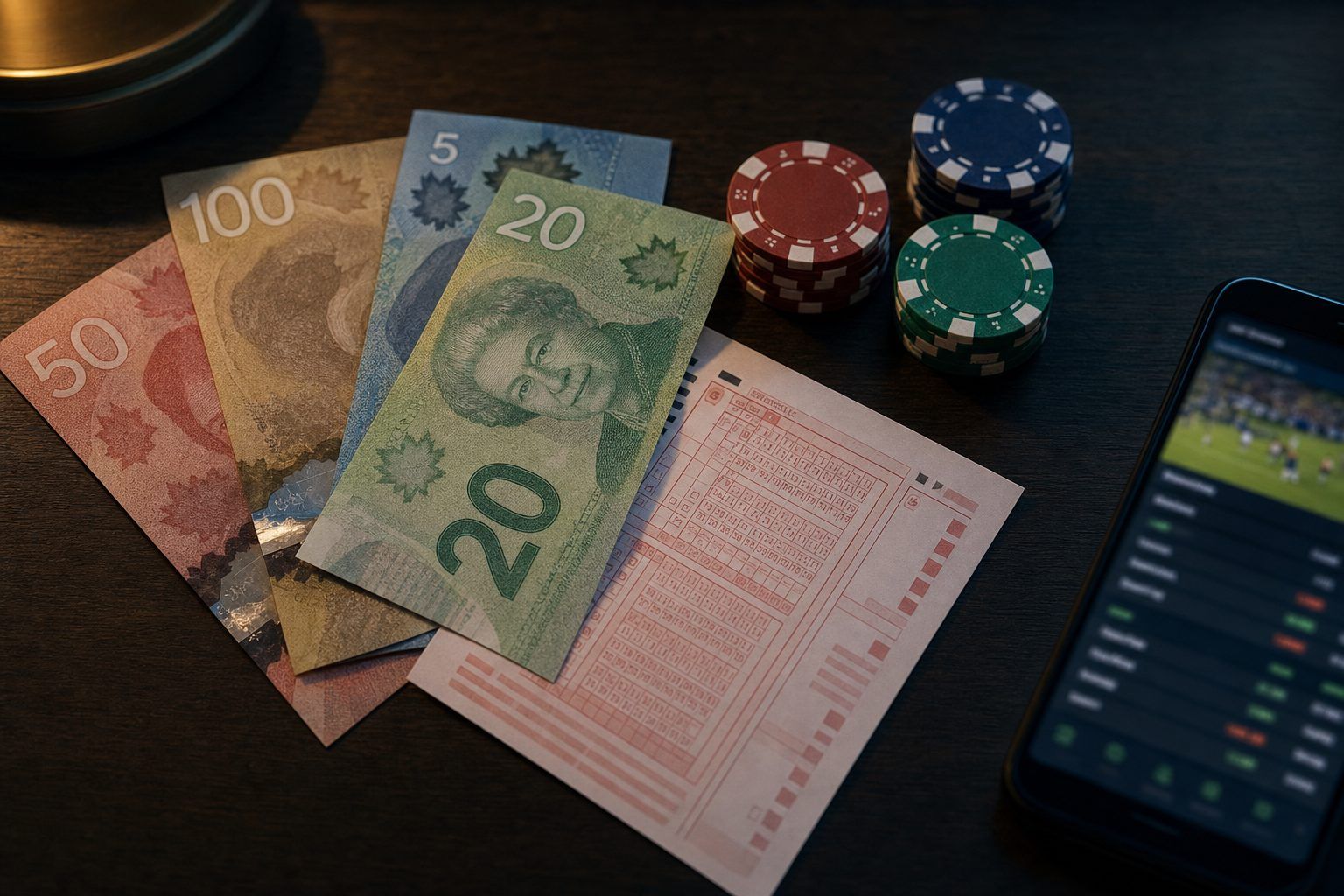
Ask a Canadian household where its gambling money goes and the first answer is usually a lottery ticket. Draw games run by the provincial lottery corporations — Lotto Max, Lotto 6/49 and the regional games sold alongside them — remain the most widely bought gambling product in the country, and the profits flow back to provincial programs. That picture has not changed. What has changed, quickly, is everything around it.
Lotteries keep the largest share
Every province channels lottery play through a public corporation, from OLG in Ontario to Loto-Québec, BCLC in the west and Atlantic Lottery on the east coast. The model keeps ticket revenue inside public budgets, which is one reason lotteries have kept their place in the weekly routine even as other forms of gambling opened up. Canadians also watch the giant American jackpots — our Powerball and Mega Millions pages are checked from Canada after every big rollover — although those tickets have to be bought in person in the United States. The same goes for EuroMillions, whose nine-figure euro jackpots draw a steady audience well beyond the countries that sell tickets.
Casinos and the move online
Land-based casinos remain a significant line in the ledger, particularly in Ontario, British Columbia and Quebec, where the largest venues sit. The bigger story of the last few years, though, is the migration of that spending onto the internet. Ontario opened a regulated online market in April 2022, licensing private casino and betting operators for the first time, and iGaming Ontario's market performance reports now track billions of dollars in wagers flowing through licensed sites every month. Other provinces run their own online platforms, and Alberta has been moving toward an Ontario-style open market.
The competition for those dollars is covered these days like any other consumer market. Mainstream outlets publish comparison guides to the best gambling sites Canada's regulated landscape offers, including a sponsored roundup from ottawacitizen.com that ranks operators on licensing, payment speed and game selection. Ten years ago that kind of guide lived on specialist forums; now it sits in a metropolitan daily, which says as much about where the money is going as any revenue table.
Sports betting joins the mainstream
The other structural change came in August 2021, when federal law was amended to allow single-event sports betting. Provincial platforms added single-game markets almost immediately, and Ontario's licensed sportsbooks followed when its open market launched. Betting that once left the country through offshore sites — or stayed informal — is now a visible, taxed part of the domestic picture, with hockey and basketball the perennial favourites.
What it means for the household budget
Spread across the whole population, Canadian gambling spending is modest — for most players it amounts to a few draw tickets a month. As in most countries, though, the averages conceal a wide range, and the shift online makes it easier to spend quickly and quietly. The provincial corporations and the regulated operators are required to offer limits and self-exclusion tools, and the advice we give for lottery play applies to every column of the ledger: treat it as entertainment, decide what it is worth to you in advance, and never chase a loss.
For all the movement toward casino apps and betting slips, the humble draw ticket is still where most Canadians start. The jackpots do the advertising on their own — and when they roll over, the numbers on this site are checked from Ottawa to Vancouver.
Lottery Reports is an information service. Gambling of any kind should be treated as entertainment, not income — play only where you are of legal age, and use the limit-setting tools offered by regulated operators.